But a truck deck isn't sold by the cubic inch. It's sold by how well it holds a 1,000 lb sled load or a 1,900 lb side-by-side without flexing, cracking or wearing out. Here's how the two metals actually compare.
The short answer
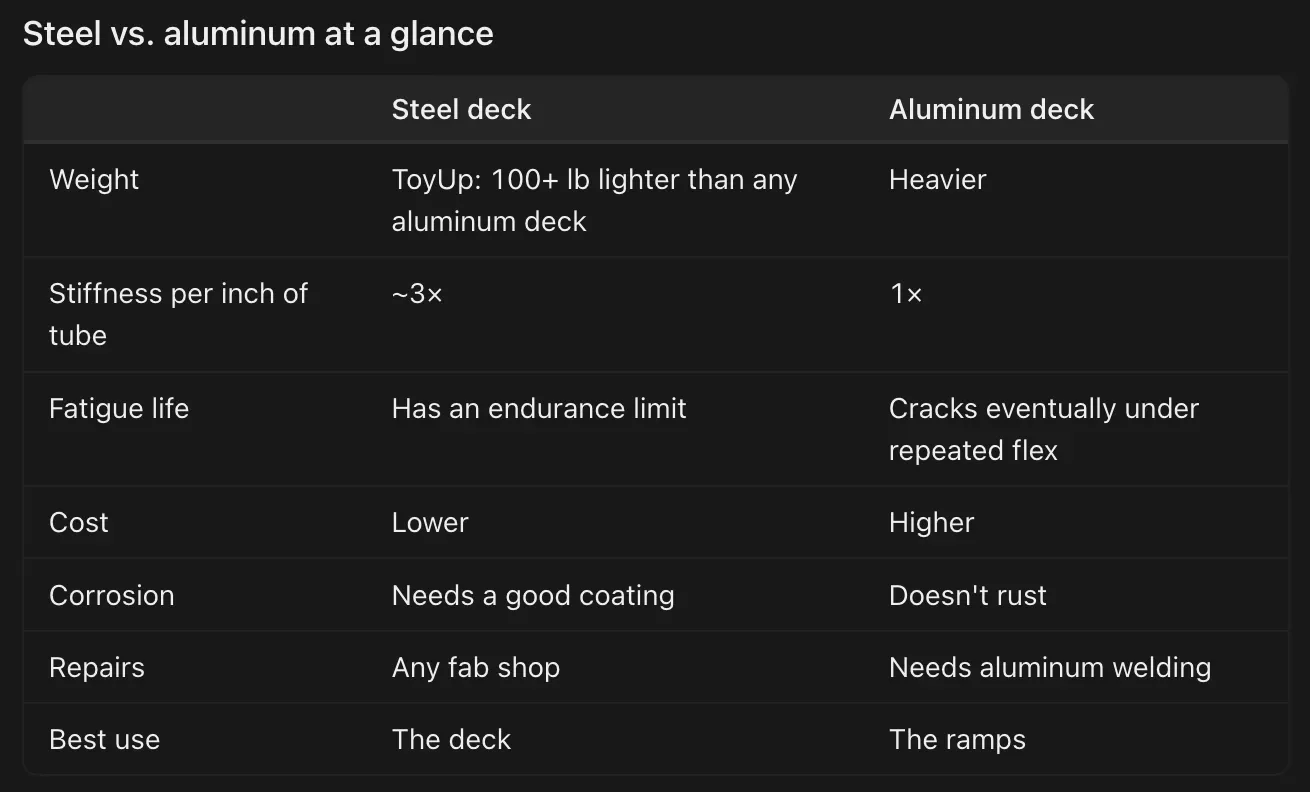
For the deck itself, steel. Built to the same stiffness, an aluminum deck is no lighter than a steel one, costs more and wears out sooner under constant load. In fact, every ToyUp steel deck is over 100 lb lighter than any aluminum deck on the market. For the ramps, aluminum, because that's the part you lift by hand. That's why every ToyUp deck is welded carbon steel and every ToyUp ramp is 6061-T6 aluminum.
Strength isn't the right measure. Stiffness is.
When people say "aluminum is as strong as steel," they're usually talking about tensile strength: how much force it takes to break the metal. Some aluminum alloys are stronger than some steels by that measure.
But a truck deck almost never breaks from one big load. What matters is how much it bends every time you load it, drive a washboard road or hit a pothole with two sleds on top. That's stiffness, measured by the modulus of elasticity:
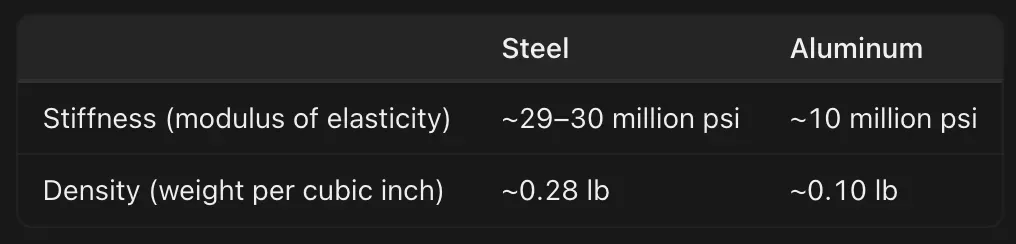
Steel is about three times stiffer and about three times heavier per cubic inch.
Why aluminum decks aren't lighter
To make an aluminum deck as stiff as a steel one, you need about three times as much metal in the tube walls. Three times the metal at one-third the weight per inch means no weight savings at all, before you add the extra bracing, thicker plates and heavier hardware aluminum decks usually need.
That's the theory. In practice it's even better for steel: every ToyUp steel deck is over 100 lb lighter than any aluminum deck on the market. Our sled deck weighs 430 lb including the ramp, because a well-designed steel frame puts metal only where it's needed.
Fatigue: the real difference over 10 years
Every load, every bump and every mile flexes a truck deck a little. That repeated flexing is called fatigue, and the two metals handle it very differently:
Steel has what engineers call an endurance limit. Keep the stress below that level and it can flex millions of times without cracking.
Aluminum has no endurance limit. Every flex uses up a little of its life, so cracks eventually start, usually at the welds.
That's why so many of our customers are former aluminum-deck owners. More than 30% of ToyUp's sales come from riders who've already owned one.
Cost
Aluminum costs more per pound than steel, and welding it well takes more specialized equipment and time. An aluminum deck built to match a steel deck's stiffness uses about as many pounds of a more expensive metal, so it usually costs more.
Rust and corrosion
This is aluminum's real advantage: bare aluminum doesn't rust. Bare steel does, especially on salted winter roads.
The fix is the finish. Every ToyUp deck gets a two-stage coating: a zinc primer base (the same kind used on long-haul trailers), then a textured Black Hammer powder coat. It holds up through Idaho winters for decades. If a deck does get chipped, steel is easy to touch up and easy to weld-repair at any fab shop. Aluminum repairs take a specialist.
Where aluminum is the right choice: ramps
A ramp is different. It doesn't live under load all day. It gets lifted, folded and stowed hundreds of times a season, so weight in your hands matters most. That's why ToyUp ramps are 6061-T6 aluminum: 45 lb for an 11′ ramp, rated for 3,500 lb at 26°. Many imported ramps use softer 6063 aluminum. See ToyUp ramps →
See it in person
ToyUp has welded truck decks from American carbon steel in Horseshoe Bend, Idaho, for 25 years, and we ship them across the lower 48 and into Canada.
Have a question about your truck? Call Will at 208-869-5353.